


 Find Your
 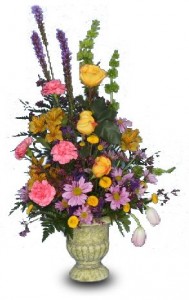 A bouquet of fresh cut flowers is always a welcome addition to any home or office. Fresh flowers can brighten someone’s day, deliver a meaningful message, decorate a special occasion, distract us from sorrow, and remind us of the gifts of nature. Part of the intrinsic value of fresh cut flowers is the fact that their beauty is so fleeting… making them all the more precious.
Nonetheless, we usually want those fresh flowers to last as long as possible. Fortunately, we can add several days to the vase life of fresh cut flowers by following the practices used by professional florists to prolong the vitality of their products. A small investment of time will pay off in the extended enjoyment of your beautiful blossoms.
Preparing Your New Flowers
First, choose fresh flowers that are not yet fully developed. Most cut flowers, with the exception of some tropical flowers and fresh orchids, will continue to open after they’ve been put into the vase. Look for blossoms that are unblemished by bruises and that feel firm to the touch. Foliage should be crisp and green, not yellowing or becoming mushy.
Flower Flower Food Mixes
Upon bringing your fresh flowers home, mix up a solution of commercially prepared fresh flower food. There are many such products on the market, such as AquaPlus™, Floralife®, and Chrysal™, and a packet or two is usually included when you purchase cut flowers. Be certain to ask for it. Most professional florists will be happy even to sell you a larger quantity of flower food from their own bulk supplies. Fresh cut flowers benefit tremendously from the use of these products, which contain three main ingredients: first, sugar in a form which is useable by the flowers so as to provide nutrition; secondly, an acidifier such as citric acid to lower the pH of the solution (cut flowers take up water best if the pH is around 4.5, well below neutral); third, a biocide to kill any bacteria that may be present. Many of the current generation of fresh flower nutrient solutions also contain an agent which helps keep the water in the vase clear.
It is important to mix the flower food accurately. Using too little can actually nourish the bacteria instead of the flowers. Too much can “burn” the petals. Mix the solution using lukewarm water – 110° F. is ideal. Fresh flowers absorb water faster if it’s warm. You may have heard of some “home remedies” for keeping cut flowers fresh, such as adding pennies, bleach, aspirin, soda, or even vodka to the water in the vase. Each of these quaint ideas is based on some aspect of a cut flower’s requirements. But it is far more beneficial to use the commercial products, accurately measured, which have solid science behind their development.
Adding Flowers To A Vase
Carefully unwrap your fresh cut flowers and remove any foliage from the stems that would fall below the water line in the vase. The leaves can rot underwater and can harbor bacteria which would decrease the life span of the cut blooms. Cut one to two inches off from the bottoms of the stems, at a steep angle. Use a sharp knife rather than scissors, which can crush the vascular system of the stem and impede the uptake of water and nutrients. If practical, cut the stems under clean water. Re-cutting helps to remove any blockages from the stem, caused by callusing or air embolisms. Once the stems have been freshly cut, immediately place the flowers gently into the vase containing the nutrient solution. Don’t drop the stems in – this can bruise the cut ends when they hit the bottom of the vase, again damaging the vascular system. Never pound or crush the stems of cut flowers, even woody branches, for the same reason.
Where To Keep Your Fresh Flowers
Once you’ve arranged the fresh flowers, place them in an appropriate location, away from heat or drafts. Never put them on top of a television set or near a heat or air-conditioning vent. If possible, keep them in a cooler location at night when you’re not enjoying them. Most cut flowers can be stored at temperatures as low as 38° or 40° F., the temperature of a home refrigerator. The exception again would be tropical flowers such as fresh orchids, anthuriums, and ginger blossoms; coming from warm, steamy regions of the world, these flowers are damaged by cold temperatures. Keep them above 55° F. Also, be sure to keep your fresh flowers away from ethylene gas, which is given off by ripening fruit and other organic materials. Many flowers are quite sensitive to ethylene, especially carnations, freesias, and lilies, which significantly shortens their vase life.
Keeping Flowers Fresh
Check the water level in the vase daily, adding more nutrient solution as necessary. Mist the fresh cut flowers with plain water as often as possible, even several times a day, helping to keep moisture in their petals. Every few days, remove the flowers from the vase, replace the water and flower food, put a fresh cut on the stems, and arrange the flowers back in their vase.
Your local florist has the experience to be able to advise you on even more flower care and handling tips that are helpful with specific varieties. For example, hydrangeas can benefit from being completely submerged under water for several minutes prior to processing. Gladioli will open their florets faster if you remove a couple of buds from the very tip of the spike. With just a little effort, you can add several days of enjoyment to your fresh cut flowers… and their beauty may not be quite so fleeting after all.



I appreciate what you said about most flowers being able to be stored at low temperatures, like you would find in a refrigerator. I want to get my sister-in-law some flowers for her graduation, but I want her to be sure that she can keep them lasting for a while. I will be sure to recommend that she store them in a cooler place at night so that she can enjoy them for longer.