Home Shop Flowers Bloomin' Blog Find Florists About FSN Contact FSN Florists Only!
Find Your Local Florist:
Home Shop Flowers Bloomin' Blog Find Florists About FSN Contact FSN Florists Only!

Daffodils, Hyacinths, Freesias, and Tulips in Bloom

Spring is coming early this year, and with it comes the season for blooming bulb flowers like daffodils, hyacinths and tulips… not to mention Easter lilies. There may be no better harbinger of spring than the sight of energetic, new daffodil leaves pushing their way up out of the warming soil, followed closely by young, green hyacinth sprouts. Fortunately, your local florist can help you get a head start on the season by providing a selection of fresh cut bulb flowers that are already available to bring some spring color indoors to your living space.
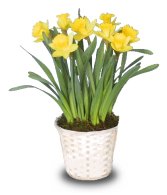
Potted Daffodils - March 2005 FSN Newsletter
Potted Daffodils

Springtime Daffodils

The cheery sunshine-yellow color of daffodils is practically irresistible. In some parts of the country, daffodils are known colloquially as “Easter flowers”, given that they usually appear during that time each year. In addition to the yellow ‘Dutch Master’ daffodils that are commonly sold as cut flowers, there are a few other varieties that are sometimes available. For example, ‘Fortune’ is a slightly smaller type of daffodil that has a bright orange corona (the “trumpet” part at the center of the flower) set in front of a collar of lemon-yellow petals. ‘Ice Follies’ is a robust variety with a large, egg yolk colored corona backed by ivory petals. There are even ‘double’ types of daffodils that have ruffled centers in place of the usual corona. With some advance notice, your neighborhood flower shop can order some of these specialty types of daffodils for you.

One important thing to remember when handling fresh cut daffodils is that they exude a clear, sticky sap that is harmful to other flowers. Be sure to allow the sap to drain from the cut daffodil stems in a separate vase of water for few hours before combining them with other cut blossoms.

Daffodils are also available as potted plants, grown from bulbs that have been pre-chilled and forced into early bloom. In addition to the above-mentioned daffodil varieties, there is a charming diminutive type called ‘Tete-a-Tete’, a perky little daffodil which grows to 6″ high or less and typically produces more than one bloom scape per bulb.

Hyacinths In Bloom

Potted Hyacinth - March 2005 FSN Newsletter
Potted Hyacinth

For spring fragrance, you can hardly beat the popular hyacinths. Hyacinths are usually long lasting as cut flowers and their scent is intensely sweet. It’s best to purchase hyacinths when the florets are not yet fully open. They’ll continue to develop in the vase even after they’ve been cut. In recent years, the range of colors available in hyacinths has grown quite a bit. Besides the familiar purple, pink, and white, hyacinths have been developed to include peach, burgundy, powder blue, and lilac varieties, among other hues. Occasionally, cut hyacinths are available “on the bulb”… in other words, with the upper half of the bulb still attached to the bottom of the stem. Hyacinths like this are generally imported from Holland, and are shipped in a rather immature state. The remaining portion of the bulb provides the extra energy needed for the hyacinth flowers to continue to grow and open. And, the hyacinth bulb itself can be an interesting design element in a floral arrangement.

Hyacinths, too, are available in a miniature form known as grape hyacinths. These sport clusters of tiny, rounded flowers on slender stems that are usually 6” long or less. Grape hyacinths (Muscari species) are available in blue, white, or purple, and they have a delicate, almost fruity fragrance. They are sold as cut flowers as well as potted plants in many areas.

Freesia Fragrance

Another strongly-scented cut flower is the freesia. Freesias have a unique spicy-sweet fragrance all their own, as well as an individualistic form. Freesia florets are borne on a structure known botanically as a “comb”, referring to the upper portion of the stem which is bent at a right angle and supports 5 to 12 or more flower buds. Freesias open from the back end of the comb first, and the back florets gradually fade as the newer ones open. A trick to induce several florets to remain open at the same time is to pinch off the terminal 2 or 3 buds, which induces the freesia to open more buds at once. Freesias come in a range of hues from deep gold to purple and everything in between, including reds, lavenders, orange, cerise, pale yellow, cream and white. Double-flowered forms are available as well. Freesias are not often sold as potted plants. Their stems are so slender and wiry that they tend to tangle or fall over unless grown in maximum light.

Tulip Time

Finally, tulips … among the most beloved of all flowers. Tulips are now available to florists year round, due to advanced forcing techniques. However, the range of colors, shapes, and sizes is most abundant in the early spring. Pinks, yellows, reds and whites abound, including striped and bi-color varieties. Tulips also come in orange, coral, apricot and lavender shades. There is even a tulip, known as ‘Queen of the Night’, that is such a deep, dark eggplant-purple in color that it appears almost black. Double-flowered tulip varieties resemble miniature peonies when they’re fully opened, fluffy with petals.
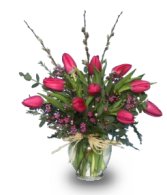
Arranged Tulips in a Vase - March 2005 FSN Newsletter
Tulips In Vase

Some of the most interesting tulips are the so-called parrot varieties. Parrot tulips sport petals that are ruffled along the edges and often brightly colored in random patterns of stripes and splashes. It was exotic tulips such as these that led to a period of wild speculation, known as “Tulipmania“, in Holland in the early 1600s. Fortunes were made and lost as traders sought to capitalize on these strange and highly-prized beauties, which were prominently featured in many of the floral still life paintings of the day. Such tulip bulbs sold for enormous amounts of money back then. Fortunately for us, parrot tulips today are not very much more expensive than regular ones.

French tulips, available now, are 3 to 4 times the size of the familiar Dutch tulip varieties. Their large, egg-shaped buds on heavy stems make a very dramatic presentation. They are beautiful and stately in a vase by themselves, or they make an eye-catching addition to a large scale flower arrangement. French tulips are most frequently seen in pale tones of ivory, peach, pink, or yellow. However, there are also deep red and bright orange varieties available. One type, called ‘Flaming Parrot’, has vivid stripes of red and yellow on deeply-ruffled petals. It’s quite spectacular.

See our earlier newsletter “Tulips and Flowers Bring a Breath of Spring” for interesting facts about tulips and tulip care and handling tips.

Caring For Spring Flower Arrangements

Caring for cut spring flowers is not difficult. After bringing them home from the flower shop, remove any foliage that may fall below the water line and rinse the stems clean of any remaining soil. Re-cut the bottoms of the stems at a steep angle about one inch from the bottom. Cut with a sharp knife, not scissors which can crush the vascular tissue in the stem and impede water uptake. Place the cut stems immediately into a tepid solution of properly-mixed, commercial flower nutrient provided by your florist. There are now specially-prepared floral preservatives made just for bulb flowers, which require a little more energy than other types of cut flowers. However, if the bulb food is not available, you can add a solution of ordinary table sugar, dissolved at the rate of one teaspoon per quart of warm water, into the vase of regular floral nutrient to provide the extra boost of energy that bulb flowers need.

Keep the flowers as cool as possible, even refrigerating them at night if you can. Change the water every 2 or 3 days, and re-cut the stems at that time. Keep them away from heat or air ducts. Following these simple procedures will extend the life of your cut spring blossoms for as long as possible. Try placing them in a vase with some flowering branches, such as forsythia, cherry, or pussy willow, for an exciting spring arrangement.

Treat yourself or someone you like to a taste of spring! Stop in to your local flower shop and let yourself be tempted by beautiful daffodils, hyacinths, freesias, and tulips. What a wonderful way to celebrate the renewal of the season, at Easter or anytime.

Roses and More Roses

“My love is like a red, red rose”…or maybe a black rose, a pink rose, or a yellow rose!

As Valentine’s Day approaches (February 14th), Cupid’s victims everywhere may be thinking about what kind of roses to send to their sweethearts. You can be sure that professional florists are thinking about it, as they busily prepare to accommodate everyone’s rose requests. Red roses, of course, are universally understood to symbolize love. But, just as there are many degrees of love, there are many shades of roses that may be called “red”. Some are so deep that they even come close to being black.

A truly black rose is a thing of legend; it doesn’t really exist. Black is a color that just doesn’t seem to occur very often in nature’s palette of flower colors. Nonetheless, the idea of a black rose seems to convey a sense of magic, mystery and rarity, and hybridizers are doing their best to provide them for us. Three such rose varieties are already on the market in somewhat limited quantities: ‘Black Magic’, ‘Black Beauty’ and ‘Black Baccara’. Each of these roses is actually a deep maroon in color. The ‘Black Magic Rose’ is a dark, velvety red. ‘Black Beauty’ is a Victorian burgundy color with a beige tone at the base of the petals. The ‘Black Baccara Rose’ is the color of a nearly ripe blackberry. It’s probably the darkest rose of all. All of these roses display a rich, velvety texture that is captivating.

Two more roses that have an air of mystery about them are called ‘Abracadabra’ and ‘Hocus Pocus’. Each of these smaller sized roses is a very dark red in color with random splashes and streaks of cream-yellow throughout the petals. ‘Abracadabra’ is a bit darker and has a few more streaks than ‘Hocus Pocus’.

As far as red roses go, they are available in a wide range of sizes and shades. Two of the largest are ‘Grand Gala’ and ‘Rouge Basier’. Each is a bright, clear red in color. ‘First Red’ and ‘Charlotte’ are two medium sized roses that have deep red petals. ‘Classy’ is a medium to large rose that tends to be more burgundy. ‘Bull’s Eye’ is a new medium to large hybrid with a rich, romantic red color. ‘Temptation’ and ‘Kardinal’ are both bright red in hue and delicate in size. ‘Red Berlin’ is a large rose with a rounded shape and tomato-red petals. An unusual new red rose is called ‘Red Intuition’, which features dark red streaks on its bright red petals.

White roses symbolize purity and innocence, and there are abundant choices among these roses as well. While none are really as white as freshly fallen snow, some rose hybrids do come very close, while others are varying shades of ivory, cream, or beige. ‘Bianca’ and ‘Escimo Roses’ are two medium sized white roses are nearly a true white in color. ‘Tineke’ has a greenish-cast to its petals, especially before it’s fully open. ‘Vendela’ is a beautifully shaped rose in a champagne ivory tone. ‘Avalanche’ is perhaps the largest white rose on the market, presenting a big hand-full of petals in a bright eggshell hue. See our June 2002 Flower Shop Network Newsletter for more descriptions of white roses.

If pink roses are more your style, your local florist has a large selection available. Pink generally means sweetness, gentleness, or happiness, but the varying shades of pink roses can imply many different moods. ‘Charming Unique’ is a rose that has a graceful, tall bud that opens in a medium, warm pink color. ‘Hot Princess’ and ‘Mascara’ are two roses that are a vivid, shocking pink. ‘Aqua’ is a new, large sized rose in a clear, lavender pink hue. ‘Anna’ is a creamy, cameo pink, while ‘Bianca Candy’ has a very soft, cotton candy pink color. A very unusual rose is ‘Henri Matisse’ that has light pink petals streaked with dark pink. There are dozens more pink rose varieties, ranging from coral through peach to nearly lavender in tone.

The choices abound among yellow roses too. Traditionally understood to symbolize joy, friendship, or even jealousy, yellow roses come in wide range of shades. ‘Aalsmeer Gold’ is an old favorite, a long lasting rose with bright golden yellow petals. The ‘Judy Rose’ is one of the largest yellow roses that is a soft, buttery yellow in tone. ‘Skyline’ and ‘Cream Prophyta’ sport pale yellow petals and ‘Golden Gate’ is a deep, golden yellow color. An interesting bi-color rose is called ‘Konfetti’, featuring yellow petals with a red edge.

Blue roses? Well, they’re more elusive than black ones. Roses don’t seem to have the genetic makeup to produce blue petals, and all the so-called blue roses on the market are really varying shades of lavender. One of the best is called ‘Blue Bird’, a medium to large, clear lavender rose with a rounded shape and a high petal count. Another is ‘Blue Curiosa’, which has a matte lilac color and seems to open more slowly. ‘Pacific Blue’ is a pale, antique lavender with a romantic, ruffled shape. Lavender roses signify enchantment.

One more rose worth considering is named ‘Milva’, with bright, pumpkin orange petals blazed with darker orange. Juicy! In September, ‘Milva’ was named “Outstanding Variety of the Year” by the Society of American Florists.

There are many more types of roses that bear mentioning, which we’ll cover in a future newsletter. But for now, bear in mind that the meanings associated with the various rose colors are not necessarily consistent or universally understood. And, the meanings that have been ascribed to some flowers have changed over the years. For a complete list of the historic traditional meanings of flowers, check the Flower Shop Network Flower Meanings page. Below, we’ve assembled a listing of the more contemporary messages that are commonly associated with the colors of roses. Use this guide at your own risk:

Red Rose true love, passion, I love you
Deep Burgundy Rose unconscious beauty
Yellow Rose happiness, friendship, freedom
Pink Rose sweetness, gentleness
Light Pink Rose grace, joy
Dark Pink rose thankfulness
Peach Pink Rose admiration, appreciation
Peach Rose let’s get together, sincerity
Coral Rose desire
Orange Rose fascination, enthusiasm
White Rose purity, innocence
Lavender Rose enchantment, love at first sight
White and Red Rose unity
Yellow and Red Rose jovial and happy feelings

Visit the Flower Shop Network Flower Gallery to view pictures of roses arranged.

Valentine’s Day is a really busy time for flower shops, so be sure to give your local florist plenty of advance notice, most especially if you want to send a specific color or variety of rose. It’s also a good idea to have a second choice in mind. And remember that your neighborhood flower shop can arrange for roses to be delivered out of town, too. Consider having the flowers delivered a day or two early. It will make easier for your florist to give you the best selection and service, and it will let your Valentine know that you just couldn’t wait to get your message across.

What will your flowers say?

Flowers and More

Did you know that you can find a lot more than just flowers at your neighborhood flower shop? A couple of issues ago, we began talking about some of the other floral products and services that are being offered by many professional florists, and today we’ll continue that discussion.

For example, baby gifts are a popular item, since many people like to send flowers to congratulate the parents of the new arrival. Besides the traditional stuffed animals like teddy bears and such, some florists carry more unique baby gifts … things like bibs and blankets and baby books, rattles or mobiles for the crib, little plastic drinking cups and wee silver spoons, even diminutive jewelry. Many of the baby gifts can even be personalized to make them more unique. Consider sending a gift basket full of baby gifts and essential supplies, like baby powder, lotion, terry washcloths and tiny T-shirts.

You don’t have to be a baby to enjoy stuffed animals. All kids between the ages of 6 months and 66 years enjoy having a furry companion at times. Most flower shops have a considerable selection of stuffed animals to appeal to the kid in all of us. Everybody needs someone to squeeze! They can be delivered with or without flowers, or even carrying a box of candy.

Candy is a perfect complement to a gift of flowers… especially if it’s chocolate candy! Who among us doesn’t like chocolate? Some flower shops are carrying unique lines of chocolates and other candies that aren’t available in other stores and which can be easily delivered alongside a fresh bouquet just to sweeten the experience. Your candy loving friends and relatives will relish it! Of course, it’s not too soon to start thinking about Valentine’s Day, and your beloved will certainly enjoy receiving a special box of chocolate candy with those roses. Most florists augment their usual inventories of candy with a more varied selection of tempting choices in advance of this holiday for sweethearts.

Greeting cards make up another category of gift items being stocked by many flower shops. You’re likely to find more unique and unusual types of greeting cards at the florist than at some of the other outlets, including hand-made styles and inspirational greeting cards, that are suitable for all occasions. Every florist supplies a small enclosure card with each flower delivery, but why not personalize your gift by having a larger and nicer greeting card included with your order? The recipient will surely be impressed.

And, if you’ve gotten a little bored by the ordinary daisies, carnations and roses, check out the more unusual tropical flowers that many florists are offering. Bold in form and bright in color, tropical flowers have become increasingly popular as they’ve also become more readily available, and they really make an impressive show in a stylish flower arrangement. Select from varieties such as anthuriums, heliconias, birds of paradise, proteas, and all kinds of orchids. Some flower shops specialize in floral designs made with tropical flowers, which can be quite dramatic and sculptural and which aren’t often seen in other kinds of stores. One thing to remember about caring for tropical flowers is that they are native to warm, humid areas of the world, and because of that they will appreciate being misted frequently with tepid water. Never refrigerate tropical flowers; instead, keep them above 55F° to avoid damage from chilling.

As you can see, the choices to be found at today’s flower shops are greater than ever before. And your neighborhood florist has the expertise and the ability to provide you with personalized service that you won’t find at the mass-merchandisers, including same day delivery and the ability to have a gift delivered in another part of the country within 24 hours or less. Stop in at your local flower shop soon to discover what other delights await you.

Christmas Cactus, Paperwhite Narcissus and Other Holiday Plants

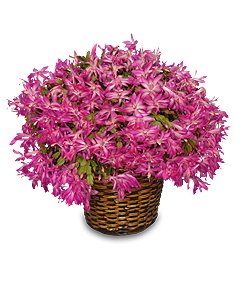
It’s that time of year when the weather outside turns frightful — or at least a bit chilly — and, in northern climates anyway, there’s nothing blooming outside. So it’s natural to crave a little holiday cheer indoors in the form of live blooming plants. Your local flower shop can fix you up with several choices, from the ubiquitous poinsettia to an exotic bromeliad (click HERE for poinsettia care tips in a previous newsletter). Two long-time favorites that are available right now are the old-fashioned Christmas cactus and the deliriously fragrant paperwhite narcissus. We’ll talk about the Christmas cactus first.

The Christmas Cactus

Christmas CactusThe plants most commonly known as Christmas cactus are members of either of two species: Schlumbergera or Zygocactus. The many cultivars of Schlumbergera bridgesii are the most commonly available, with flower colors ranging from red to white with every shade of peach, pink, fuchsia, and even yellow in between. The Christmas cactus is an epiphytic (tree- dwelling) succulent plant, native to the warm, humid rainforests of Central and South America, and while it is botanically a true cactus, it should not be treated like those fat, spiny cacti found in the deserts of the southwestern United States.

Christmas Cactus Care

Christmas cactus care is fairly easy. It does well if given plenty of light (but no direct, burning sun) and regular watering during the growing season of spring and summer. A little extra humidity is appreciated too, which can be accomplished by misting the plant frequently with water. Keep the plant warm. Soil should be well-drained, and the pot ought to be a little snug.

Forcing A Christmas Cactus To Bloom

In the fall, gradually reduce the amount and frequency of watering and begin to prepare the plant for dormancy. This is how to get a Christmas cactus to bloom. Being a so-called “short day” plant (just like the poinsettia), a Christmas cactus requires as least 12 hours of completely uninterrupted darkness every night for about three weeks beginning October 1st. This long period of darkness each night induces the plant to set flower buds, and even the light from an overhead fixture or a street lamp outside the window can disrupt the cycle. During dormancy, maintain the soil on the dry side, but never completely dried out so that the plant shrivels. Cool nighttime temperatures are preferred for buds to set — around 60° F. Beware, however, that buds and flowers may drop if the plant is too cold, too wet, or in a draft.

After flowering, the Christmas cactus will need a rest. Continue to water infrequently and provide cooler night temperatures. In spring, resume normal watering, keep the plant warm and humid, and fertilize every two weeks or so throughout the growing season with a balanced house plant food. Given proper care, a happy Christmas cactus can live for decades.

Paperwhite Daffodils For Christmas

There are no flower bulbs better for forcing than the paperwhite narcissus (daffodils), and they’re usually available right about now. You can either buy the pre-cooled, loose narcissus bulbs by themselves, or ask your florist for some paperwhites that have already been potted up and are beginning to sprout. In either case, the bulbs have already been subjected to an imposed dormant period, making forcing easier. Besides paperwhites, loose narcissus bulbs are also available in a yellow variety called ‘Soleil d’Or’. Select large, firm bulbs. You can plant them closely together in a pot, burying the bulbs just up to the neck in a well-drained soil mixture. Keep the soil evenly moist. Or place them in a shallow dish which is filled with gravel to support the bulbs. Keep the dish full of water. Start them off in a dark, cool spot until they begin to sprout.


Growing Paperwhites

As the narcissus bulbs start to grow, place them in a very bright, sunny window. The maximum amount of light will help keep the growing foliage and flower scapes from stretching and becoming weak and leggy. If the stems do get too weak, support them with slender green plant stakes. Keep the bulbs cooler at night to promote stocky growth.

Paperwhite Blooming Indoors

Forcing paperwhites indoors generally produces flowers in 3 or 4 weeks. Make successive plantings to enjoy a longer blooming period. Bulbs that have been forced usually won’t bloom again, so it’s best to discard them after they’ve flowered.

With a little advance planning — or some help from your local florist — it’s possible to have flowers blooming indoors all winter long. What a lovely way to brighten the season! And of course, a gift of flowers is always appreciated. All of us at Flower Shop Network wish you and yours a very happy and peaceful holiday.

There’s More Than Flowers at Your Local Florist

If you haven’t visited your neighborhood flower shop lately, you might want to stop in and see what’s in store. It so often happens that our relationship with a florist begins and ends at the telephone or the computer screen that sometimes we never know about the other kinds of goods and services that they offer. So this month and next, we’ll be talking about some of the other kinds of products that many florists are providing for their customers.

For example, home decor is an area that’s a natural extension of floristry since so many arrangements, whether they’re composed of fresh blossoms or artificial flowers, are designed to complement a home interior. Flowers are a perfect accent in practically any home decor setting, and can go a long way toward enlivening the decorating scheme of a room, either spare and contemporary or filled with antiques. Custom designs of silk flowers are among the specialties of most florists, and they can create a unique arrangement that will coordinate beautifully with the other elements of the interior setting, combining colors, textures, and forms in such a way that they repeat or play off of the home decor furnishings.

Very few artificial flowers are actual silk these days. In fact, the fabric petals of most silk flowers are made of cotton/polyester blends. Manufacturers of artificial flowers — or “permanent botanicals” as we prefer to call them — use a combination of materials, including plastics, resins, polystyrene foams, and latex, to create the most lifelike blossoms, the best of which can scarcely be distinguished from their living counterparts. Silk flowers, of course, are available from many outlets. However, a professional florist is most likely to carry the highest quality artificial flowers and foliage and will have the expertise to arrange them in a way that will beautifully highlight your home decor.

Flower shops can be excellent sources of other home decor accessories as well, such as picture frames, candles, potpourri, baskets, lamps, china and crystal, and more. Naturally enough, containers that hold flowers are likely to be most abundant. Fresh and artificial flowers alike look great in crystal vases, and many florists carry an ample selection of them. A vase doesn’t have to be Waterford crystal in order to be sparkling and beautiful. A flower shop can be a great place to find attractive lead crystal bowls and vases that won’t break the budget, whether it’s for your own home or for a gift. If crystal — Waterford or not — isn’t your preference, select from a variety of ceramic, wood (very popular right now), wire, colored glass (another hot item), plastic resin, or stoneware vessels to serve as decorative and functional additions to the home decor setting.

Some florists have decorated their stores with antiques, using them, in many cases, as display fixtures and props. Others specialize in selling antique furniture and other decorative items as well as floral designs. Many very popular florists across the country have successfully combined artwork, furniture (including antiques), and interesting accessories with their flower businesses. If you’re a collector of antiques, you may find it worthwhile to frequent a few flower shops; who knows..you may find a treasure that’s off the beaten path of the usual antiques stores. And even if the object of your desire doesn’t have a price tag on it, inquire about it anyway; there is very little in the typical flower shop that isn’t for sale.

Interestingly, several large floral and gift stores have begun to offer a bridal or wedding registry service. Going beyond the traditional crystal and china table settings of the typical bridal registries in department stores, an upscale flower shop can also provide a wedding registry that includes all sorts of beautiful and unusual giftware. With the holiday season fast upon us, imagine a soon-to-be-married couple establishing a Christmas wedding registry with a florist who specializes in holiday decorations. Selections could include ornaments, wreaths, swags, centerpieces…even an artificial Christmas tree. The newlyweds could have their entire home decked out for the holidays with wedding gifts from the registry; gifts that would be fondly cherished again year after year as the decorations were brought out and the gift-givers were remembered.

Next month we’ll take a look at some of the other sorts of merchandise and services that florists are providing. In the meantime, stop in soon at your own local flower shop to see what kinds of things you can find there besides flowers. You might be pleasantly surprised.

Sunflowers: Worthy of a Photo…

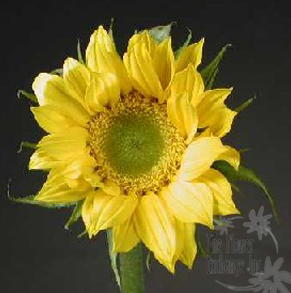
…..or a painting, or a sketch. Since becoming one of America’s most popular blossoms, sunflowers seem to be appearing just about everywhere. Commercial growers have devoted vast acres to sunflower gardens in order to meet the demand for fresh blooms, as well as for seeds and for sunflower oil. Florists are using them in centerpieces and bouquets of all types. Photos of sunflowers appear on greeting cards, in advertising, on wrapping paper, and just about anyplace where a bold icon of warmth, happiness, generosity, or abundance might be needed. Sunflowers seem to symbolize everything good.

Sunflower

Sunflower

Sunflowers are annual plants of the genus Helianthus (from the Greek “helios” – meaning “sun”, and “anthos” – meaning “flower”). They get their name from the fact that their round, golden blossoms grow facing the moving sun. Sunflowers are native to North America, where they were known to native peoples more than 8,000 years ago. Archeological evidence suggests that sunflowers were cultivated and improved upon as early as 2300 B.C., possibly predating the farming of corn, beans, and squash. Sunflower seeds provided a handy source of nutrition to the indigenous tribes of America, while dyes were extracted from petals and pollen. Pulverized seeds also yielded oil, which was used for cooking and in hair treatments. Various parts of sunflowers were also involved in traditional medicinal applications.

In the middle of the 1900’s, it was the Russians who extensively hybridized sunflowers, developing new varieties which were bred for maximum oil seed production and disease resistance. Of the many garden cultivars which are popular today, it’s the “Russian Giant” which seems most spectacular. Its impressive photos on seed packets and pictures in garden catalogs — depicting them towering over normal-sized humans — captivate our attention, with flower heads often a foot or more across.

Our fascination with sunflowers has undoubtedly been fueled by their notoriety as the subjects of fine art. Vincent Van Gogh immortalized them in a series of canvases painted in the late 1800’s. His colleague, Paul Gauguin, even painted Van Gogh as he painted his sunflowers in the small studio they temporarily shared in the south of France. Another Impressionist artist, Claude Monet, painted his own dazzling picture of a vase of sunflowers. These and other works became world famous, and provided inspiration for generations of artists to come, encompassing photos, graphic designs, and sculptures as well as paintings. Such a lofty role for our common but radiant garden sunflowers!

Sunflowers are really quite easy to grow. They’ll thrive in just about any garden, provided they have plenty of sunlight. Being annuals, sunflowers sprout readily from fresh seed, and they complete their growing cycle in just one season. A rich, loamy soil is best. Make sure they get regular waterings, as their roots are relatively shallow. Sow successive plantings, two weeks apart, to lengthen your enjoyment of the harvest. Giant varieties of sunflowers may require staking to prevent them from falling over under the weight of enormous seed heads.

SunflowerArrangementOf course, if you don’t have the time or space for a garden, your local florist can provide you with beautiful, long-lasting sunflowers that you can enjoy at home in a vase, or send to someone in another state. Many new varieties have appeared on the market, including yellow, orange, russet, and chocolate-petaled forms, smaller hybrids in a more manageable scale, and even a fuzzy, rounded type known as ‘Teddy Bear’. Stop by a professional florist’s shop soon and see what charming sunflowers are in store. Then, take some artistic photos of your own.

Teddy Bears and Other Stuffed Animals

Beware!! The animals have escaped from the zoo!

Teddy Bear

Photo courtesy of Petting Zoo Plush, Inc

Happily, they’ve been rounded up by local florists everywhere, and today you can find a great selection of teddy bears and other stuffed animals at many flower shops. They make wonderful gifts for babies and other children of all sizes… even for grown-ups who just need a little cuddling. After all, teddy bears are the original ambassadors of hugs.

Teddy bears got their start in the early 1900s, when Theodore Roosevelt was the President of the United States. Teddy was Roosevelt’s nickname. He was known as a great hunter, and he was once depicted in a 1902 newspaper cartoon sparing the life of a captured bear cub, saying that it would be unsportsmanlike to shoot it. Based on a true incident, the cartoon drew immediate attention. A Brooklyn, NY, shopkeeper displayed the cartoon along with two small stuffed bears, made by his wife, in the window of his stationery store. The “Teddy’s Bear” craze was born, and the stationer went on to found the Ideal Novelty and Toy Corporation so as to meet the huge demand for the cuddly toys.

At nearly the same time, the Steiff Company in Germany introduced small, jointed stuffed bears to Europe. The Steiff bears had evolved from the wood and felt, pincushion type toys which the company had been manufacturing for years. U.S. distributors imported thousands of them. Thus, the lovable stuffed animals that we all know as teddy bears were born simultaneously on both sides of the Atlantic.

A hundred years later, stuffed animals are available in nearly every species. Domestic pets, such as beagles, poodles, and other plush dogs, tabby and calico cats, hamsters, goldfish, bunnies and parrots are popular choices. Farm animals are well represented by horses, pigs, ducks and sheep, and a complete menagerie of stuffed zoo animals, from aardvarks to zebras, rounds out the selection. The favorite of all plush animals, however, is still the old-fashioned teddy bear. He’s come a long way from his humble beginnings as a novelty toy fashioned of old quilt scraps, stuffed with excelsior and fitted with shoe-button eyes. Now, teddy bears come in all shapes and sizes and in every color of the rainbow. They may be dressed for any occasion, adorned with a simple bow around the neck, or just “bear-naked”. Small bears, made of terrycloth with a rattle inside, are excellent gifts for newborns. Larger ones, with a myriad of personalities and facial expressions, are popular with older kids. Teenagers name them after boyfriends and girlfriends. Even adults can appreciate the emotions and the memories represented by a teddy bear.

Plush animals are easy to have delivered alongside a fresh flower arrangement or a basket of plants, even clutching a bouquet of balloons, and will remain as a lasting reminder of your good wishes for years to come. Your professional florist can arrange to send them locally or out of town, from Alaska to Virginia, Arizona to Vermont.

Teddy bears will never go out fashion. We’ve all had our childhood favorites, and they’ve changed a bit over the years. But there are some things about teddy bears that will always remain constant; they are faithful friends, they’re good at keeping secrets, they’re always ready with a comforting hug, and they have a boundless capacity for love.

Keeping Fresh Flowers Fresh

Fresh Flower ArrangementA bouquet of fresh cut flowers is always a welcome addition to any home or office. Fresh flowers can brighten someone’s day, deliver a meaningful message, decorate a special occasion, distract us from sorrow, and remind us of the gifts of nature. Part of the intrinsic value of fresh cut flowers is the fact that their beauty is so fleeting… making them all the more precious.

Nonetheless, we usually want those fresh flowers to last as long as possible. Fortunately, we can add several days to the vase life of fresh cut flowers by following the practices used by professional florists to prolong the vitality of their products. A small investment of time will pay off in the extended enjoyment of your beautiful blossoms.

Preparing Your New Flowers

First, choose fresh flowers that are not yet fully developed. Most cut flowers, with the exception of some tropical flowers and fresh orchids, will continue to open after they’ve been put into the vase. Look for blossoms that are unblemished by bruises and that feel firm to the touch. Foliage should be crisp and green, not yellowing or becoming mushy.

Flower Flower Food Mixes

Upon bringing your fresh flowers home, mix up a solution of commercially prepared fresh flower food. There are many such products on the market, such as AquaPlus™, Floralife®, and Chrysal™, and a packet or two is usually included when you purchase cut flowers. Be certain to ask for it. Most professional florists will be happy even to sell you a larger quantity of flower food from their own bulk supplies. Fresh cut flowers benefit tremendously from the use of these products, which contain three main ingredients: first, sugar in a form which is useable by the flowers so as to provide nutrition; secondly, an acidifier such as citric acid to lower the pH of the solution (cut flowers take up water best if the pH is around 4.5, well below neutral); third, a biocide to kill any bacteria that may be present. Many of the current generation of fresh flower nutrient solutions also contain an agent which helps keep the water in the vase clear.

It is important to mix the flower food accurately. Using too little can actually nourish the bacteria instead of the flowers. Too much can “burn” the petals. Mix the solution using lukewarm water – 110° F. is ideal. Fresh flowers absorb water faster if it’s warm. You may have heard of some “home remedies” for keeping cut flowers fresh, such as adding pennies, bleach, aspirin, soda, or even vodka to the water in the vase. Each of these quaint ideas is based on some aspect of a cut flower’s requirements. But it is far more beneficial to use the commercial products, accurately measured, which have solid science behind their development.

Adding Flowers To A Vase

Carefully unwrap your fresh cut flowers and remove any foliage from the stems that would fall below the water line in the vase. The leaves can rot underwater and can harbor bacteria which would decrease the life span of the cut blooms. Cut one to two inches off from the bottoms of the stems, at a steep angle. Use a sharp knife rather than scissors, which can crush the vascular system of the stem and impede the uptake of water and nutrients. If practical, cut the stems under clean water. Re-cutting helps to remove any blockages from the stem, caused by callusing or air embolisms. Once the stems have been freshly cut, immediately place the flowers gently into the vase containing the nutrient solution. Don’t drop the stems in – this can bruise the cut ends when they hit the bottom of the vase, again damaging the vascular system. Never pound or crush the stems of cut flowers, even woody branches, for the same reason.

Where To Keep Your Fresh Flowers

Once you’ve arranged the fresh flowers, place them in an appropriate location, away from heat or drafts. Never put them on top of a television set or near a heat or air-conditioning vent. If possible, keep them in a cooler location at night when you’re not enjoying them. Most cut flowers can be stored at temperatures as low as 38° or 40° F., the temperature of a home refrigerator. The exception again would be tropical flowers such as fresh orchids, anthuriums, and ginger blossoms; coming from warm, steamy regions of the world, these flowers are damaged by cold temperatures. Keep them above 55° F. Also, be sure to keep your fresh flowers away from ethylene gas, which is given off by ripening fruit and other organic materials. Many flowers are quite sensitive to ethylene, especially carnations, freesias, and lilies, which significantly shortens their vase life.

Keeping Flowers Fresh

Check the water level in the vase daily, adding more nutrient solution as necessary. Mist the fresh cut flowers with plain water as often as possible, even several times a day, helping to keep moisture in their petals. Every few days, remove the flowers from the vase, replace the water and flower food, put a fresh cut on the stems, and arrange the flowers back in their vase.

Your local florist has the experience to be able to advise you on even more flower care and handling tips that are helpful with specific varieties. For example, hydrangeas can benefit from being completely submerged under water for several minutes prior to processing. Gladioli will open their florets faster if you remove a couple of buds from the very tip of the spike. With just a little effort, you can add several days of enjoyment to your fresh cut flowers… and their beauty may not be quite so fleeting after all.

Balloon Bouquets

Balloon bouquets lift spirits and are perfect for special occasions. Florists across America have balloons available in a huge variety of shapes, sizes, colors and themes. They can be added to an arrangement of flowers or plants, delivered in a big bundle all by themselves, or used to enhance any festive event. Colorful birthday balloons add bounce to the celebration. Shiny Mylar balloons elevate the mood of any party. Balloons are being used as decorations for weddings, gifts for retirees, get well messages for patients, and whimsical treats for kids and adults alike. They are even soaring to new heights at celebrations of life – otherwise known as funerals.

Types of Balloons

Valentines Day Mylar BalloonBalloons are generally available in two types – the traditional latex balloons, which are made of a thin, stretchy kind of rubber, and the popular Mylar balloons, manufactured of metalized film. Each type of balloon has its own unique attributes, comes in many sizes, and can be used in several ways.

  • Latex Balloons

Because latex is somewhat porous, balloons that are made from it will not stay inflated as long as Mylar balloons. Latex balloons may be inflated with either air or helium. Because a molecule of oxygen is larger than a molecule of helium, air-filled balloons will stay inflated longer than helium balloons will, since the larger molecules do not pass through the balloon’s “skin” as easily. But air-filled balloons, of course, don’t float. Many florists use a special product – something like rubber cement – to coat the inside of a latex balloon before inflating it with helium. This helps seal the pores in the latex and keeps the balloon afloat longer. Still, latex balloons are best for short term display.

Recently, event specialists have found an exciting and dramatic way to use them, putting battery operated lights inside giant-sized balloons and floating them over nighttime outdoor parties. The luminous effect can be spectacular!

  • Mylar Balloons

The special, reflective film which is used to make Mylar balloons isn’t as porous as latex, so these balloons tend to last longer after inflation, and because they’re not as flexible, less pressure is exerted on the walls of a Mylar balloon. Mylar balloons have another advantage in that they can often be re-filled with either air or helium, extending the life span. Once filled, however, Mylar balloons should be kept away from too much heat or sunlight, which can cause the gas inside to expand and burst the balloon. Your professional florist stocks Mylar balloons in a wide assortment of novelty shapes and characters, suitable for any age or occasion.

Balloon Ideas

Air-filled balloons can be secured into a floral arrangement using special balloon picks. They can also be tied tightly together onto a length of monofilament (fishing line) to create columns or arches – popular props for decorating a special event. Helium balloons can be readily tied to the neck of a vase, the handle of a basket, or a bag of candy.

For a children’s birthday party, a clever “Gumball Machine” balloon can be created by stuffing three or four small, air-filled latex balloons of various colors inside a large, helium-filled, clear latex balloon. Everyone will wonder how those “gumball” balloons got inside that bigger one! The trick is to insert the small (5″) balloon into the neck of the large (14″) balloon before inflating either one. Holding the small balloon in place, the large balloon is then partially inflated with helium. Before the gas has a chance to escape, the small balloon is filled with air, tied off, and dropped into the larger one. The process is repeated until the desired number of “gumballs” is squeezed inside the bigger balloon, which is then fully inflated with more helium.

Most florists can assemble a combination of latex and Mylar balloons into festive balloon bouquets and arrange for delivery anywhere, either locally or out of town.

  • Balloons & Hospital Rules

Most hospitals have special rules regarding balloon delivery. They may limit the size or number of balloons that can be delivered at one time. Mylar balloons may be restricted from patients’ rooms due to the fact that they can generate static electricity which interferes with the functioning of electronic monitors. Your local florist can advise you about the hospital rules in your area.

  • Balloon Disposal

Please remember to dispose of balloons responsibly and avoid releasing them into the environment. They can be very hazardous to wildlife that might ingest them or become entangled in the ribbons or strings used to tie them.

Now is not the time to fight inflation…..send a buoyant balloon bouquet today!

House Plants for Interiors

Golden Pothos

Golden Pothos

House Plants for Interiors

Every interior space can benefit from the addition of a few house plants to the decorating scheme. Whether they are alive and growing or artificial replicas of botanical specimens, house plants can lend a touch of warmth and vitality to any living area or commercial environment, helping to relax visitors and guests and delivering a message of welcome. Their presence shows that the occupant has an appreciation for things natural, something to which we can all relate.

There are several factors to consider when selecting house plants for an interior space. The first of course is the size, shape, and growth form of the plant as compared to the area where it will be placed. For example, the tall, upright character of a Dracaena or a Ficus Tree might be most appropriate for a narrow corner or for use as a room divider. The cascading vines of an Ivy Plant or a Philodendron may be most appealing if they are allowed to tumble from the top of a tall cabinet or dresser. A shrubby Peace Lily, Spathiphyllum or Dwarf Schefflera, Arboricola could fill a gap between two chairs or other pieces of furniture.

Another important consideration will be the cultural requirements of the house plants themselves. While many of the most popular specimens that are sold as house plants are well-adapted to the environmental conditions found in the average home or office, there are some exceptions.

Low-Light House Plants
The following are among the best house plants for low-light situations and will grow well in a north-facing window or under the artificial light found in many offices.

  • Philodendrons
  • Chinese Evergreen, Aglaonema
  • Peace Lily, Spathiphyllum
  • Mother-In-Law’s Tongue, Snake Plant, Sansevieria
  • Dracaenas

House Plants that Need Some Light
These plants thrive in slightly brighter interiors, such as an east or west-facing window in a home or office.

  • Dumb Cane, Dieffenbachia
  • Schefflera
  • Ivy Plants
  • Palms

Sun-Loving House Plants
Certain house plants flourish under very bright light. A sunny spot next to a south-facing window is ideal for the following kinds of house plants.

  • Croton
  • Cacti
  • Bromeliads
  • Succulents (Jade Plant, Aloe Vera, etc.)
Parlor Palm

Parlor Palm

A general rule of thumb is that the more colorful a plant is or the more variegation it has – the more light it will require in order to stay healthy.

Something else to think about is the amount of water a house plant will need. Typically, a plant will grow more slowly, and therefore use less water, if it is in a relatively dark location as opposed to a bright one. Most people tend to over water their house plants, causing the lower leaves to turn yellow and drop off. It’s usually better to allow the potting soil to become a little dry between thorough waterings, a cycle which more closely approximates the plants’ natural growing conditions and prevents the roots from drowning. There are some exceptions, such as Ferns and Ivy Plants, which should never get really dry. No plant, however, should be left standing in a saucer of water, which could cause the roots to rot. Also, be aware that large pots dry out much more slowly than small ones. Big house plants in large pots may only need watering once a month, especially during the winter.

Nearly all house plants will benefit from frequent, regular misting with tepid water so as to increase the humidity in the immediate environment. Most of our homes and offices have much drier air than do the tropical jungles from which our favorite house plants hail, and this dry air can cause browning of the leaf tips (just as it dries our own skin). Another solution to the problem of dry air is to place the house plant onto a tray of pebbles, perhaps an inch deep, which are kept wet. Do not bury the plant’s pot in the gravel, but keep the bottom of it above the water level. Water evaporating from the pebbles will create extra humidity in the air around the plant.

The soil in which the house plant is potted will, over time, become depleted of the nutrients needed for growth and maintenance. Therefore, house plants should be fed monthly during the spring and summer growing period with a balanced house plant fertilizer. Use the fertilizer at a dilution rate of about one-to one-half quarter of that which is recommended on the label. This will prevent an excessive build-up of salts in the soil, which can damage the plant. Every two or three years, re-pot the plant into fresh potting soil, using a larger pot if warranted.

English Ivy

English Ivy

Fortunately, if all these care requirements aren’t practical in your situation, or if you want to have a plant in a spot where a live one won’t survive, your professional florist can provide you with a selection of realistic-looking, permanent house plants which are botanically accurate in many details. The quality of these artificial specimens has improved tremendously in the past several years, so that the best of them are essentially indistinguishable from living house plants. All they’ll need is dusting!

Visit our House Plants Picture Gallery to see pictures of some of the more popular house plants. Then, visit your local florist who has the knowledge and creativity to advise you on the best plant selections for beautifying your particular indoor environment and for sending to out-of-town friends or loved ones.