Home Shop Flowers Bloomin' Blog Find Florists About FSN Contact FSN Florists Only!
Find Your Local Florist:
Home Shop Flowers Bloomin' Blog Find Florists About FSN Contact FSN Florists Only!

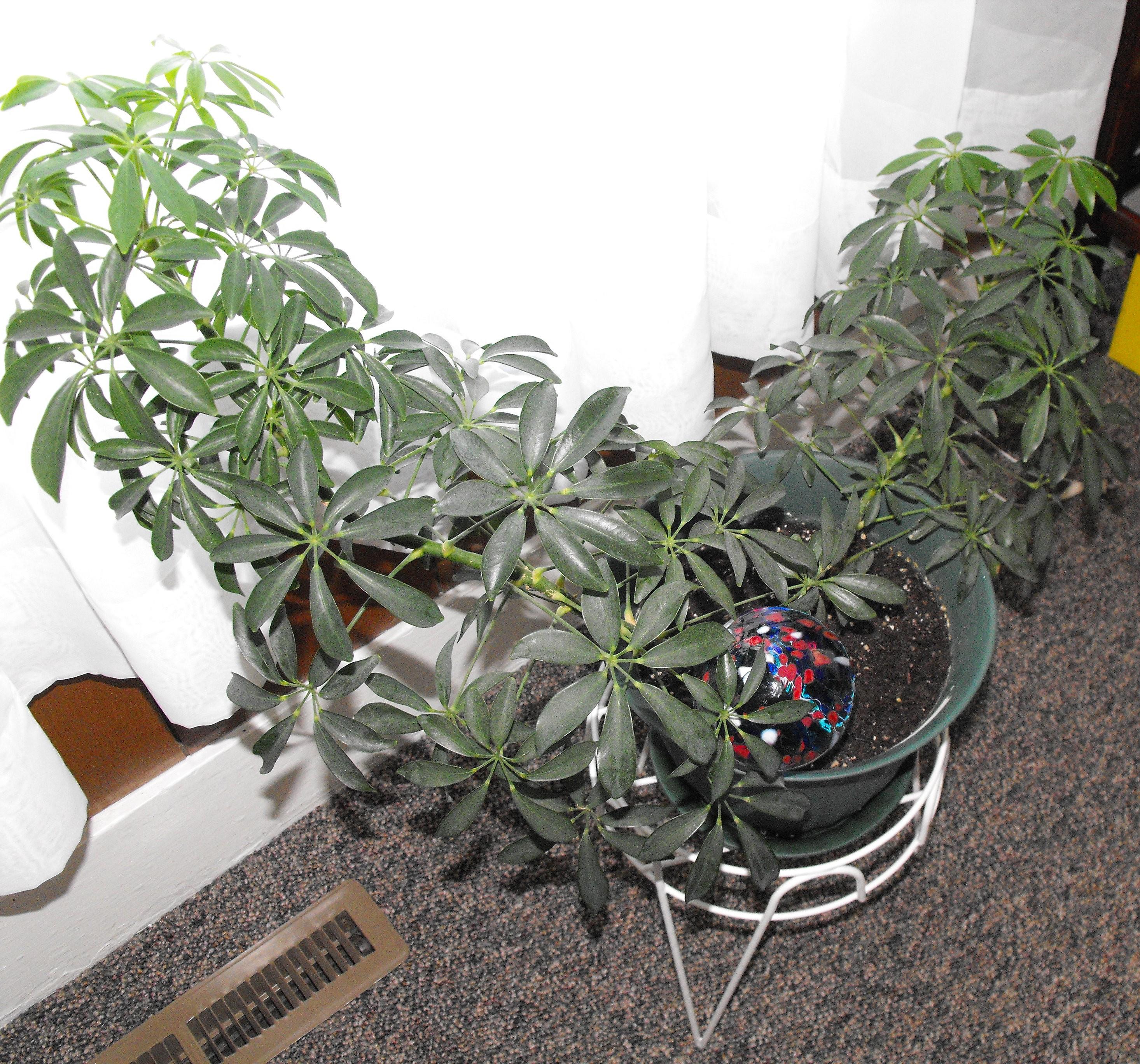
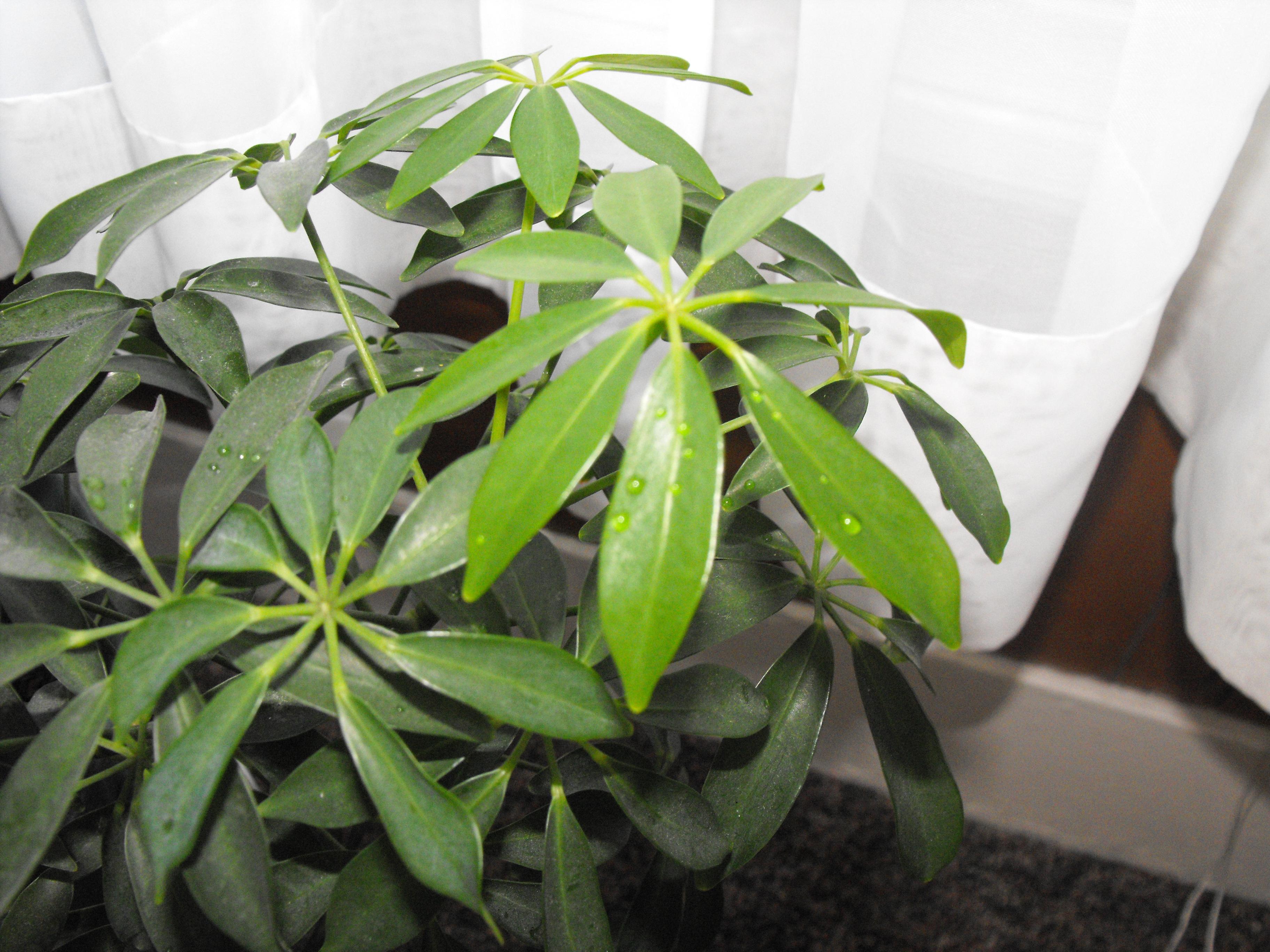
Umbrella Plant, Octopus Plant, Schefflera Are One In The Same

Schefflera

Schefflera

Octopus Plant

Octopus Plant

Ask the Expert: Can you tell me what kind of plant this is???

I was wondering if you could tell me what kind of plant this is so that I can look up more information on the care of this plant. Thank you. Tammy

Plant Expert Reply:
This plant goes by many names Brassia arboricola, arboricola, schefflera, octopus plant and umbrella plant. We have great schefflera care instructions for this plant in our flower gallery.
Polka Dot Plant Is A Nice Gift

Ask the Expert: Hi. I live in Florida and one of would you please answer my question?
Hi. I live in Florida and one of my students gave me this pretty plant with green leaves and pink spots. I would like to know how to take good care of it. Thank you so much. Isabel


Plant Care Expert:

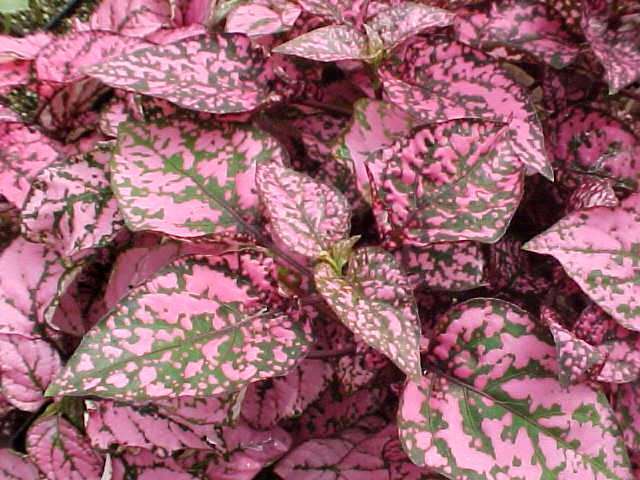
Hypoetes phyllostachya

Hypoetes phyllostachya

I believe your plant is a Polka Dot Plant (Hypoetes phyllostachys). Does your plant look similar to the picture shown?

If so the plant is relatively easy to take care of, just follow a few easy care instructions and your plant should thrive.

First keep the plant moist.  Make sure it is in a container that can drain off excess water. Mist around the plant every other day or keep in a humid environment.

Second,  give it plenty of light but no direct sun.  In thie summer time you can set it outside under shade. This plant likes warm temperatures and during the growing season it likes to be fed every two weeks.  During the winter feed it once a month.

To keep the plant shapely, trim leggy growth.

Although hypoetes is used as a garden plant, it makes a wonderful houseplant.

Good lucky with your plant and keep me posted.

Aspects of Design: Closed Forms Versus Open Forms

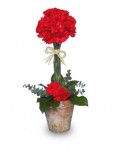
"Fiery Red Topiary" Closed Form Flowers

To florists and floral designers, “form” is the word used synonymously with “shape” and refers to either the outline or three-dimensional shape of a flower arrangement. There are two key forms in floral design terms. These are “closed forms” and “open forms.” Both are key elements of floral design and are essential to creating beautiful flower arrangements appropriate for any space or occasion.

Closed-Form Flower Designs

Closed form flower designs can best be described as “dense” because these forms lack negative space. That is to say, the floral materials used to create the designs are tightly packed allowing little to no room for light to pass through, thus it is one seemingly continuous piece and consistent shape throughout.

An example of commonly used flowers with closed form designs are Beidermeyer style bouquets and centerpieces. These are very compact rings that together form a small dome shaped arrangement. Because there is little negative space (none) in a Beidermeyer style flower arrangement, these and other flower arrangements with similar styles are referred to as closed form flower designs.

Open-Form Flower Desigsn

"Fiery Red Topiary" Open Form Flowers

Open form flower designs are the opposite. These are considered light and airy. They have more negative space which may prevent the outline from being fully defined. Not defining the outline allows the design to merely imply a geometric shape.

An example of commonly used flowers with open form flower designs are contemporary arrangements. While there are many closed form contemporary flower arrangements, most contemporary styles focus on the idea of the shape. Rather than present a shape, they present lines (linear flowers) that form unique angles, shapes, and appearances.

Consider placing a light behind both designs and looking at their shadow on the wall. Like mass flowers, closed form flower designs will reveal an easily defined shape. Open form flower designs will produce a shadow that looks like no particular shape, but rather a series of overlapping lines and patterns.

Planting Peace Lilies Outdoors

Ask The Expert: Can the Peace Lilly be planted out doors?

Plant Expert Reply:
Yes and No. Peace lilies can be planted outdoors in moist but well-drained soil under deep shade conditions. They are not hardy in any of our zones. Therefore in the United States and Canada, they can be used only as an annual planting during the late spring and summer months.

Propagating Bird Of Paradise – Strelitzia

Ask the Expert: where are the seeds on a white bird of paradise?
I want to propagate my white bird of paradise but am unable to get the entire root system of the babies. I’ve attempted it and not been successful, seeing as how they’re too deep in the ground. They stay green for about a week or two then die. Is there a specific time when I should be doing this? I’m thinking maybe the seeds. Are the seeds in the flower itself? If not where? Arcelia

Plant Expert Reply:
To propagate Bird of Paradise (Strelitizia) you divide the root suckers from the plant in the late spring. You want to dig up clumps that have 4 or more shoots. You will separate them into single stems removing the dead leaves & roots. You can wash the roots and even soak them in a bleach water solution (1 part bleach – ten parts water) for ten minutes – this will help with any bacterial problems that can arise. Then you can plant the divisions – be sure they are plant at the same depth as they were originally. It can take up to 12weeks for new roots to form. So be patient. This propagation method will take 1 to 2 years to achieve a mature blooming plant.

You can start Bird of Paradise from seed. However, it will take 3 to 5 years for the seed to become a mature plant. If you plan on harvesting the seeds from your own plant, look for black round seeds that have a fuzzy orange cover on one end. Before you plant them you will need to soften the hard exterior of the seed. Do this by soaking the seeds in room temperature water over night. You will need to also nick the seed before you plant it. Keep you soil moist as the seeds germinate.

Good Luck and let me know how it goes.

Blind Plant Indentification

Ask The Expert: I RECENTLY PURCHASED A HOUSEPLANT AT A LOCAL GARDEN CENTER. IT DID NOT HAVE
ANY TAG AND NO ONE AT THE CENTER WAS SURE WHAT IT WAS. IT WAS TOO INTERESTING AND BEAUTIFUL FOR ME TO PASS UP. IT IS GROWING IN A NEAT MOUND SO FAR. THE LEAVES ARE OVAL SHAPED, ABOUT 1″X 2″. VERY DARK IN COLOR, THE UNDERSIDE IS DARK PLUM COLORED, THE TOP IS DARK GREEN WITH SILVER STRIPE
AND NICELY TEXTURED. THE NEW LEAVES ARE RATHER PLUM COLORED AND THEN GET DARKER. OVERALL IT LOOKS SIMILAR TO AN EMERALD RIPPLE OR SOME SORT OF PEPEROMIA. WOULD YOU HAVE ANY IDEA WHAT IT IS?? PATTY

Plant Expert Reply:
Nothing is more challenging than identifying a plant without seeing it. Your awesome description makes it a little easier. There are two possibilities: a type Pilea or a type Peperomia. Below are some pictures of different types. See if any look like your plant. If not, send me a picture of yours and I’ll try to make a better identification. My choice would be the Aluminum Plant.

Adding Elements To Lucky Bamboo

Ask the Expert: Bamboo Plants
I have a small top vase with 3 curly Bamboo plants, they have been beautiful for the 3 years that I have had them. I recently bought some orange glass disks to put them in to match the new colors in my kitchen. They started turning yellow, and the smaller new leaves were falling off.

I have always changed their water at least once a week, and use plant food as per your directions. Please help! I don’t want to loose them, today I took them out of the glass disks, washed the roots really well and put them back in plain water. I do want to use the orange glass disks if you have a solution for me.

Thanks,
Wanda Graham

Plant Expert Reply:
You may need to clean the container as well, just in case the discs had a residue that affect the lucky bamboo.

Any time you add elements such as pebbles, glass discs, rocks, etc. to your lucky bamboo container, you need to wash them first. Why? Because, you want to make sure they do not have any chemical residue on them that might harm the lucky bamboo. So I suggest you first let the lucky bamboo recover from it’s trauma. You can then wash the discs with soapy water, rinse them thoroughly and then place them in the lucky bamboo container.

You might check to see if the discs you purchased are safe for plants especially lucky bamboo. Not all pebbles, rocks or decorative discs are safe to use in aquatic situations. So check before you place your discs back in with the lucky bamboo.

Peace Lily In Shock: What To Do

Ask the Expert: Have I damaged my Peace Lily after transplanting?
I purchased 2-3 small Peace lilies about 7 years ago for my boss. She is not a plant person, so it became my responsibility to keep it alive. It has been transplanted once from the pot it was originally in to a slightly larger pot and it has thrived increasing to 5 plants.

Lately it has been droopy and in need of water every other day. It has remained in the office in a relatively climate controlled environment until yesterday. I am in Florida and unfortunately my vehicles air conditioning went out. By the time I drove the 2 miles to home, the plant was all wilted and dying looking. I placed it in the shade as my houses a/c was not on and the inside temperature was almost as uncomfortable as my trucks.

I kept in in the shade and the ambient temp dropped due to an approaching storm. It was in the low 80’s to upper 70’s. I gently removed the plant from the pot and soaked it in water to try to loosen the dirt around the roots. My intention was to put it in 2 pots. I was afraid to cut or try to finger separating wasn’t working on the roots.

Carefully I put soil in the new pot and added a little water. I kept this up in layers and added the ‘mother’ plant in to the center. I added potting soil around it and added water to moisten it. I left is under my oak tree overnight in the shade and it appeared to be slightly recovering until the drive to work this morning. One of the plants in the mother plant has dark wilted green leaves and is majorly droopy. The rest of the plant is a little ‘depressed looking’ with slightly wilted leaves.

I have one of those watering globes and added it in once the plant was placed back in it’s home in the office.

Will my plant recover or have I done permanent damage to it? It really doesn’t appear to be loving life right now. Thoughts/help is greatly appreciated. Cheryl

Plant Expert Reply:

The short answer is to give the plant time, and it will be fine.

The long answer is:

When a peace lily or any other plant is in stress don’t add any more stress to it.  After [Read more…]

See The Light This Fall With Autumn Illuminations

I can’t get past the Autumn Illuminations fall centerpiece. Among the other fall flowers, this centerpiece stood out instantly. That’s saying quite a lot considering how colorful and beautiful the other arrangements are!

"Autumn Illuminations" Fall Centerpiece

"Autumn Illuminations" Fall Centerpiece

But what was it about Autumn Illuminations that drew my eye back to it? Well for starters, it’s not an ordinary bouquet or typical arrangement. It has practicality, purpose and function. The Autumn Illuminations centerpiece is a wreath of fall flowers surrounding a warm colored candle. Imagine the smell of a pumpkin spice candle surrounded by fresh fall flowers! Mmmmm.

I saw this centerpiece and knew that it had to be the featured flower arrangement for August. The summer is winding down and the fall is getting ready to come ahead full force. Before you trade your summer flowers for Halloween and Thanksgiving arrangements, find a middle ground with colorful fall flower centerpieces like Autumn Illuminations. You’ll be glad you did! Plus it’s something nice to come home to if you or your husband is a farmer rushing to finish the harvest.

Trust me. You’ll love having the Autumn Illuminations centerpiece on your table.

Brown Seed On Schefflera Could Be Brown Soft Scale

Ask the Expert: schefflera problem
I have a schefflera plant which I take outside during the spring and summer months. It grows like crazy. Last year i noticed these brownish seed like things on many of the leaves. I cut it way back, and again this year thoughs seed like things are covering a good portion of it. I don’t know if its a bug or disease problem and haven’t been able to find anything that describes this problem. Stephanie

Plant Expert Reply:

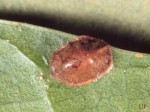
Brown Soft Scale

Brown Soft Scale

It sounds like you might have an insect called brown soft scale. I found this picture of Brown Soft Scale From University of Florida” Does the brown scale look like the brown seed on your schefflera?

You will need to spray an insectide on your plant to kill these insects.  You will need one that is safe to use on houseplants.  Your local garden center should have one.  You can also try insecticidal soap which can be found at your local garden center.